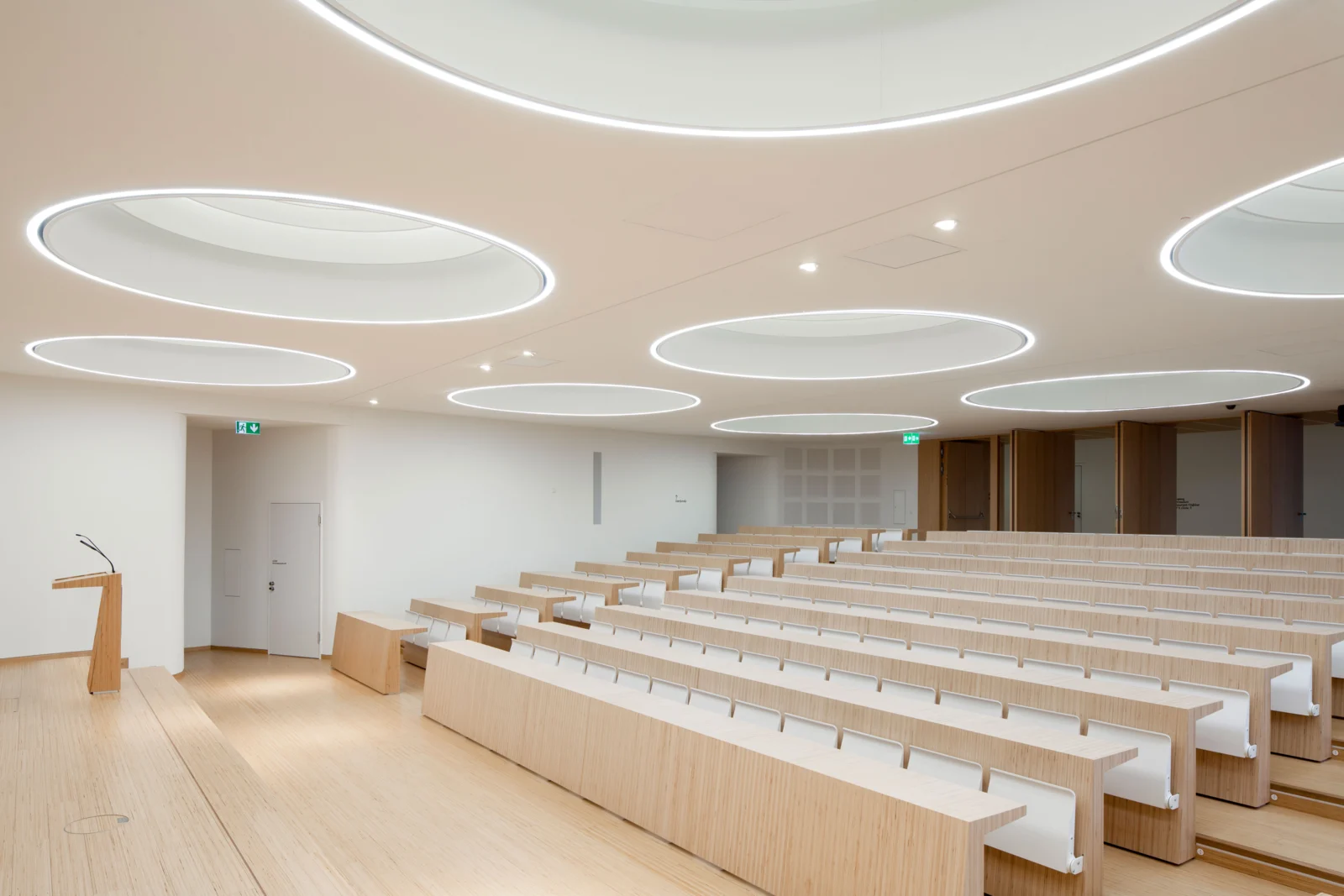
Custom indoor climate for a leading research facility
Through close collaboration with laboratory planners and contractors, Swegon delivered tailored room-air solutions that addressed complex laboratory requirements while supporting the building's ambitious sustainability and indoor climate targets.
A national hub for neurodegenerative research
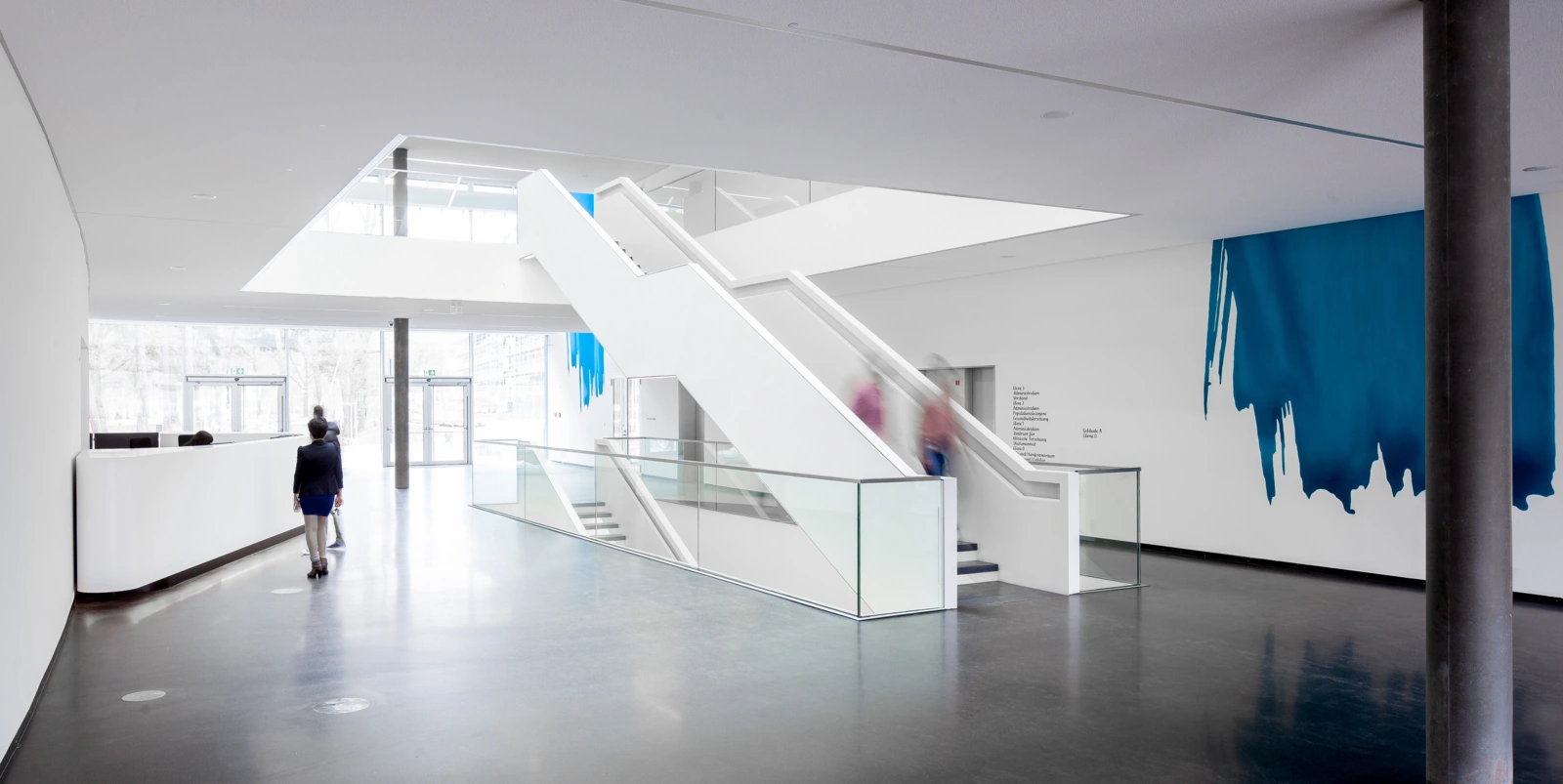
The German Center for Neurodegenerative Diseases (DZNE) in Bonn is the headquarters of one of Germany’s six federal health research centers within the Helmholtz Association. The institute conducts research into Alzheimer’s, Parkinson’s and other neurodegenerative diseases. Located on the Venusberg Campus of Bonn University Hospital, the building was designed by Wulf Architekten. With approximately 16,000 m² floor area distributed across three organically shaped volumes – entrance, research and preclinical buildings – the facility provides advanced working conditions for more than 500 scientists and staff.
High ambitions for sustainability and indoor performance
From the outset, DZNE set ambitious goals for both scientific excellence and environmental performance. Together with Waldner Laboreinrichtungen as laboratory system integrator, the project team defined stringent requirements for indoor climate control, hygiene, serviceability and energy efficiency. The building became the first laboratory building in Germany to achieve BNB Gold certification, the highest rating under the Federal Government’s sustainability assessment system. For air distribution, this meant high demands on component quality, hygienic design, measurable performance and long-term operational reliability.
Architectural complexity and diverse laboratory needs
The project brings together a complex laboratory program within a sensitive natural setting. The organically shaped building with its large atria and daylight-filled spaces create architectural qualities, but also restrict ceiling zones and limit the integration of technical installations. At the same time, different functional areas – basic research laboratories, MRT areas, clinical research spaces and a preclinical institute – each require dedicated pressure regimes, hygiene levels and safety concepts. To meet BNB Gold criteria, the air distribution system also needs to support demand controlled ventilation, comply with VDI 6022 hygiene requirements and enable traceable performance throughout the building’s life cycle.
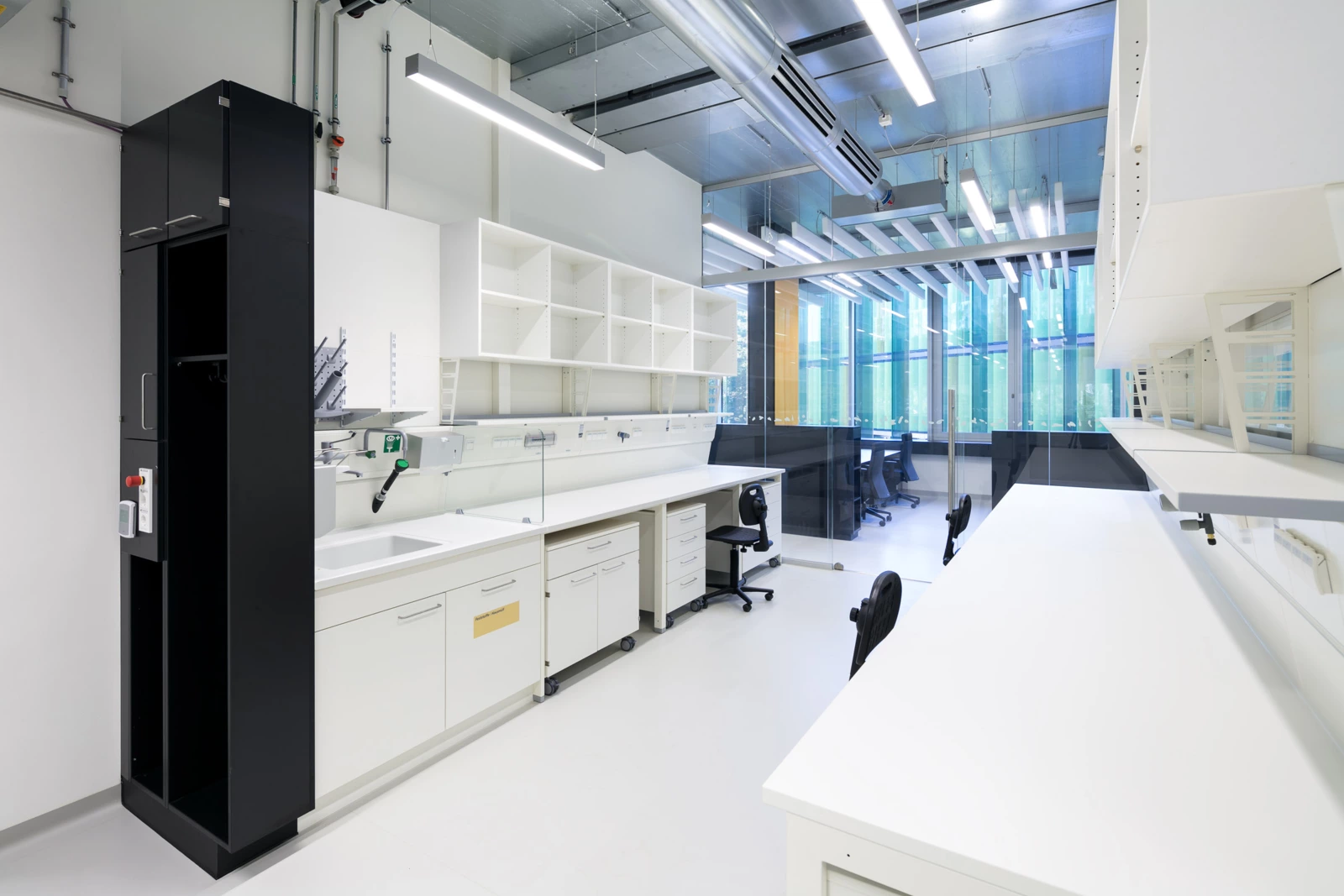
Pre-engineered tube diffuser solutions at scale
To meet these requirements, Swegon developed and supplied custom tube diffuser solutions specifically designed for large-scale laboratory applications. Working closely with Dr. Heinekamp Labor- und Institutsplanung, HVAC contractor Caverion Deutschland and as a sub-supplier to Waldner Laboreinrichtungen, Swegon supplied each tube diffuser strand as a complete, coordinated unit. Each strand typically combines an analogue variable volume regulator, integrated tube silencer and a VZ-AR tube diffuser. This pre-engineered approach simplified planning, ensured manufacturing precision and significantly reduced installation and commissioning effort on site.
Integrated systems for laboratories and common areas
The custom laboratory tube system is built around VZ-AR tube diffusers with two blow-out areas and upstream flow regulation. Constant flow controllers and regulators stabilise airflow in different laboratory zones. The STG controllers manage compact fans in tube diffuser and chilled-beam extensions. For areas with higher cooling demand, AKK chilled beams remove heat close to the source using water-based cooling. Offices, meeting rooms and circulation areas are supplied by PDA swirl diffusers and PU radial flow/high-induction diffusers, offering low-noise, discreet supply air. VZ‑41 slot diffusers provide linear integration along walls and ceiling edges, supporting the architectural concept.
Designed for commissioning, maintenance and future flexibility
The delivery of complete, pre-engineered tube diffuser strands ensured predictable commissioning and straightforward adjustment of airflow volumes. KVR-S, VVSR-RU and STG controllers support rebalancing during periodic verification or future functional changes. Tube diffusers, chilled beams and covers can be opened for inspection and cleaning, supporting hygiene management and long maintenance intervals. As research requirements evolve, individual zones can be adapted without fundamental changes to the overall air distribution concept.
Setting a new benchmark for laboratory ventilation
The DZNE project demonstrates how custom-engineered room-air solutions can support both advanced research and ambitious sustainability goals. Through close collaboration with laboratory planners and HVAC contractors, Swegon contributed to a flagship research building that combines high indoor performance with energy efficiency in line with the defined project requirements - setting a new standard as Germany’s first BNB-Gold-certified laboratory building.