
RE:3 LinkedIn series
During spring 2026, we presented a LinkedIn series to show the practical use of RE:3, our concept for driving circularity in the built environment. We shared our expertise and showcased examples that really make a difference. Through RE:3, we take responsibility for:
- RE:duce – reducing embodied carbon in our products through alternative materials and design adaptations.
- RE:use – taking back products, refurbishing and making them available to the market again.
- RE:vitalise – extending products’ lifespan by making updates on site.
This summarises the first post, the following posts are presented below!
A look in the rear-view mirror
SECOND POST
A short recap of what we have done within RE:duce, RE:use and RE:vitalise.
RE:duce - we are progressively replacing virgin steel in many of our products with steel containing at least 75% recycled material. This reduces the embodied carbon footprint. In parallel, we are replacing synthetic refrigerants with near zero GWP alternatives such as propane, which significantly lowers the climate impact of heating/cooling solutions.
RE:use - we take back previously installed products, carry out quality assurance and upgrades, and reintroduce them to the market with the same warranties and performance as new ones. Reuse can reduce the climate footprint by up to 95%.
RE:vitalise – we have upgraded more than 1000 products and systems in their existing locations, extending the service life of already installed solutions. Revitalised solutions have around 25% of the climate impact of new ones, at approx. one third of the replacement cost.
What comes next, products where steel is replaced by plastic or cardboard? We already have plastic units in production, cardboard is initiated as a pilot project and wood has been tested as a concept.The latter resulting in a 40% reduction in climate impact.
Learn more about our wooden air handling unit
RE:duce in focus
THIRD POST
Through our RE:duce activities, we continue to integrate sustainable materials and designs into our product development process. Today, we are proud to present several new RE:duce additions to our product portfolio.
Each product below is designed with alternative materials to lower the embodied carbon, and with the same clear focus on not compromising performance.
- PACIFIC, a future-proof chilled beam manufactured with recycled and renewably produced steel as standard.
- SORDO and CLV, silencers using recycled and renewable steel as standard too.
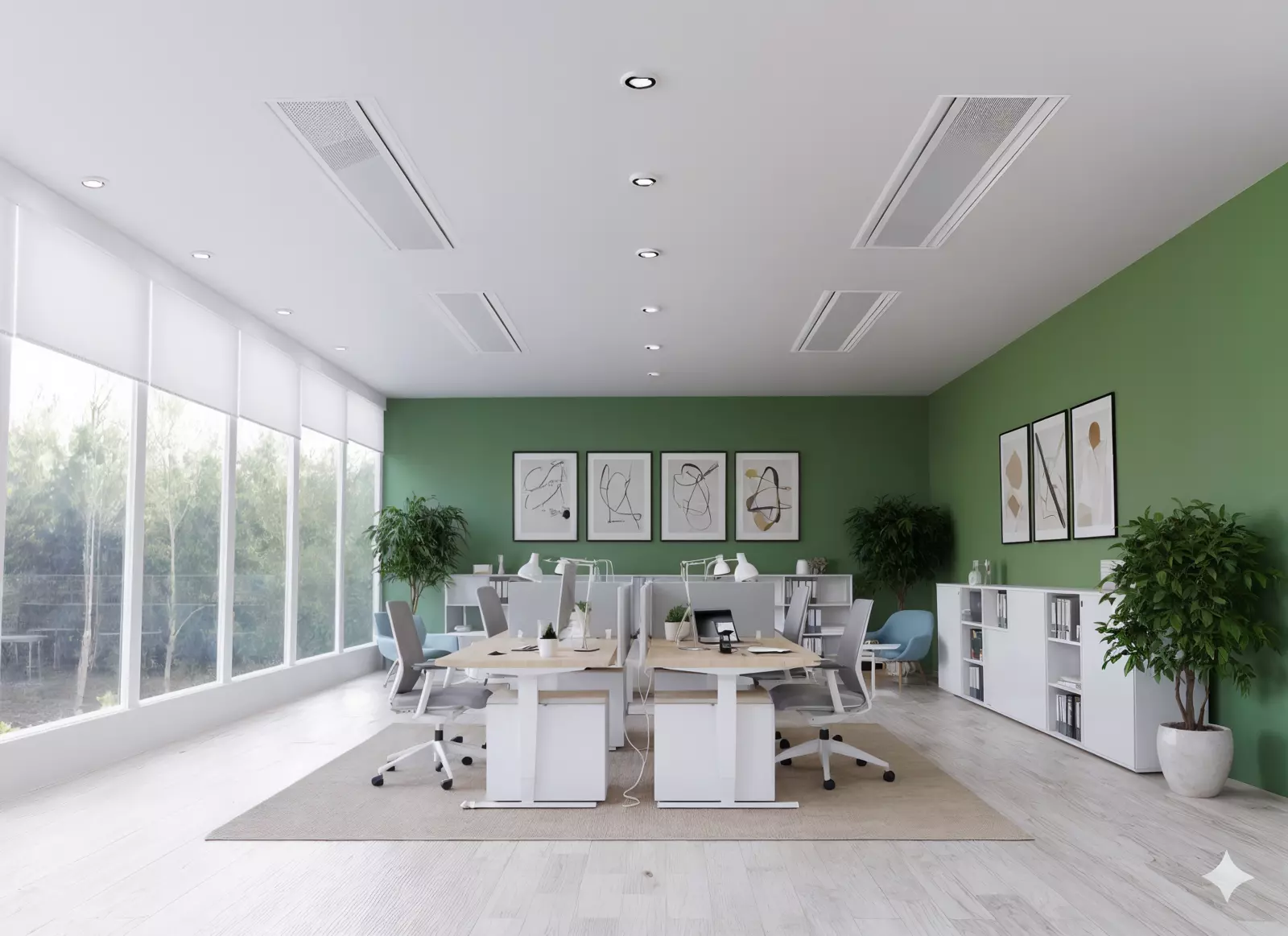
- SOFTLINE Wood, a modern climate ceiling system made from responsibly sourced wood.
- Roof hoods, wall hoods, louvres, dampers and filter cabinets can be selected with a low‑carbon zinc‑magnesium alternative to traditional sheet metal.
RE:vitalise
Forth post
Within our RE:3 concept, RE:vitalise focuses on upgrading existing installations to extend their lifetime, and by doing so, significantly reducing embodied carbon. A recent example comes from the Johannispark care centre in Suhl, Germany.
The building has relied on a GOLD air handling unit for nearly 30 years, and a modernisation was due. A full replacement would have meant higher cost, more downtime and unnecessary embodied carbon. Instead, the property owner in consultation with us at Swegon chose our Refurb Kit, developed to bring older GOLD units up to today’s standards.
All work was successfully completed by our German Swegon team in a single day, allowing the care centre to remain fully operational throughout. The result is a unit with an improved energy performance, easier operation, expected service‑life extension of around 15 years and a substantially lower embodied carbon footprint compared to a full unit replacement.
Find the full reference case here
All RE:3 activities in one project
Fifth post
We are proud to share our first project where all parts of the RE:3 concept came together in one solution, tailored to our customer’s requirements on indoor climate and sustainability.
The property owner faced a familiar challenge: ageing air handling units across several densely populated buildings and ambitious sustainability targets. A traditional replacement approach would have been too disruptive and carbon‑intensive.
In close cooperation with our customer we were able to combine RE:use, RE:duce and RE:vitalise, which provided the property owner with a total 75% lower embodied carbon compared to a full replacement, an extended service life for existing units and an installation with almost zero downtime. The significant difference was generated by the reused air handling unit that had previously been returned to our factory, upgraded and quality-assured, and sold back to this customer with a minimal carbon footprint – only 5% of that of a new unit.
This project stands out with its circular approach and demonstrates, in practice, how the building industry can reduce embodied carbon emissions.
The reference case is found here
RE:use of room units
SIXTH POST
The manufacturer plays a key role in enabling scalable reuse of indoor climate products, ensuring performance equivalent to new and providing them with a full warranty. At Swegon, previously installed HVAC products are returned to our factories as an activity under the RE:3 concept, called RE:use. In our factories, we ensure performance and quality before reintroducing them to the market for a second life.
In this part of our RE:3 series on circularity, we focus on reuse of air diffusers, commissioning boxes and silencers. The film shows how the products are processed in our factory in Tomelilla, Sweden:
- Cleaning and inspection
- Repairs and upgrades
- Functional testing and quality assurance
- Final checks and warranty assignment
“Reuse helps us address one of the HVAC industry’s biggest climate challenges, the materials. It is not only a practical way for us to contribute to our customers’ sustainability goals, but also a way forward for reaching our own commitments under the Science Based Targets initiative.”Caroline Jacobsson, Circularity Director at Swegon Group
RE:use partnership with Fabege
Seventh post
Reduced embodied carbon impact is the main reason for why Fabege, part of the RE:create network, returns indoor climate products to our RE:3 concept for circularity. Hear Sandra Holmström, Sustainability Specialist at Fabege, share the reasoning behind one of Sweden’s largest property companies’ circular ways of working.
By returning products for quality assurance and reuse in new projects, Fabege reduces waste and embodied carbon for themselves, as well as for future projects while also contributing to a more extensive reused product availability.
Progress within RE:duce
Eighth post
"The progress within RE:duce is the result of strong collaboration across Swegon. It is encouraging to see how our initiatives are turning into measurable results that support more sustainable choices in the HVAC industry," says Annika Sedwall, Business Development Director Configurable AHU at Swegon.
The recent launch of a new Environmental Product Declaration (EPD) for the GOLD/SILVER RX air handling units marks an important milestone within RE:duce, part of our RE:3 concept, and aims to minimise environmental impact and support more sustainable solutions.
The updated EPD demonstrates a significant reduction in embodied carbon through the use of recycled and renewably produced steel in the casing of the next generation GOLD/SILVER units. The result is around 30% reduction in embodied carbon, with approximately 70% of the steel from recycled sources.
Find out more about RE:duce
From pilot project to industrial-scale implementation
Ninth post
Circularity, and reuse in particular, is receiving increasing attention in the HVAC industry, but the journey from pilot projects to industrial-scale implementation is not always straightforward. Through the Nordic Circularity Piloting Program, we partnered with Vasakronan, Skanska, Demontera and Lindab Sverige and tested the dismantling, refurbishment and reuse of HVAC products in real projects. The pilot encountered practical challenges regarding costs, responsibilities, quality assurance and business models for circular flows.
The findings showed that reuse is often not limited by technical capability. Instead, early planning, clear roles and suitable incentives are key factors in making circular practices doable in project delivery. Caroline Jacobsson, Circularity Director at Swegon, shares learnings and reflections from the project in a blog post.
To the blog post