A successful energy renovation using heat pumps
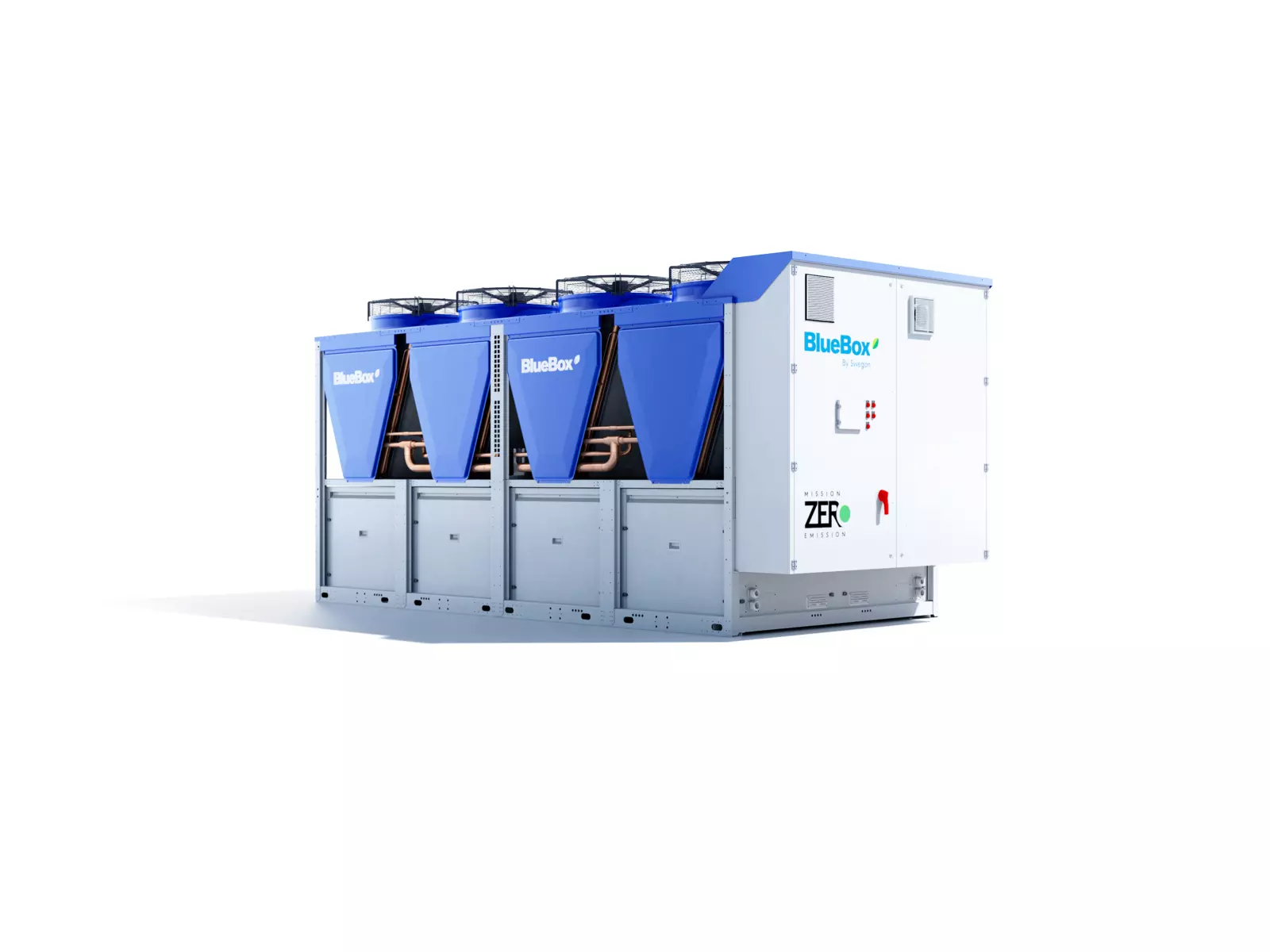
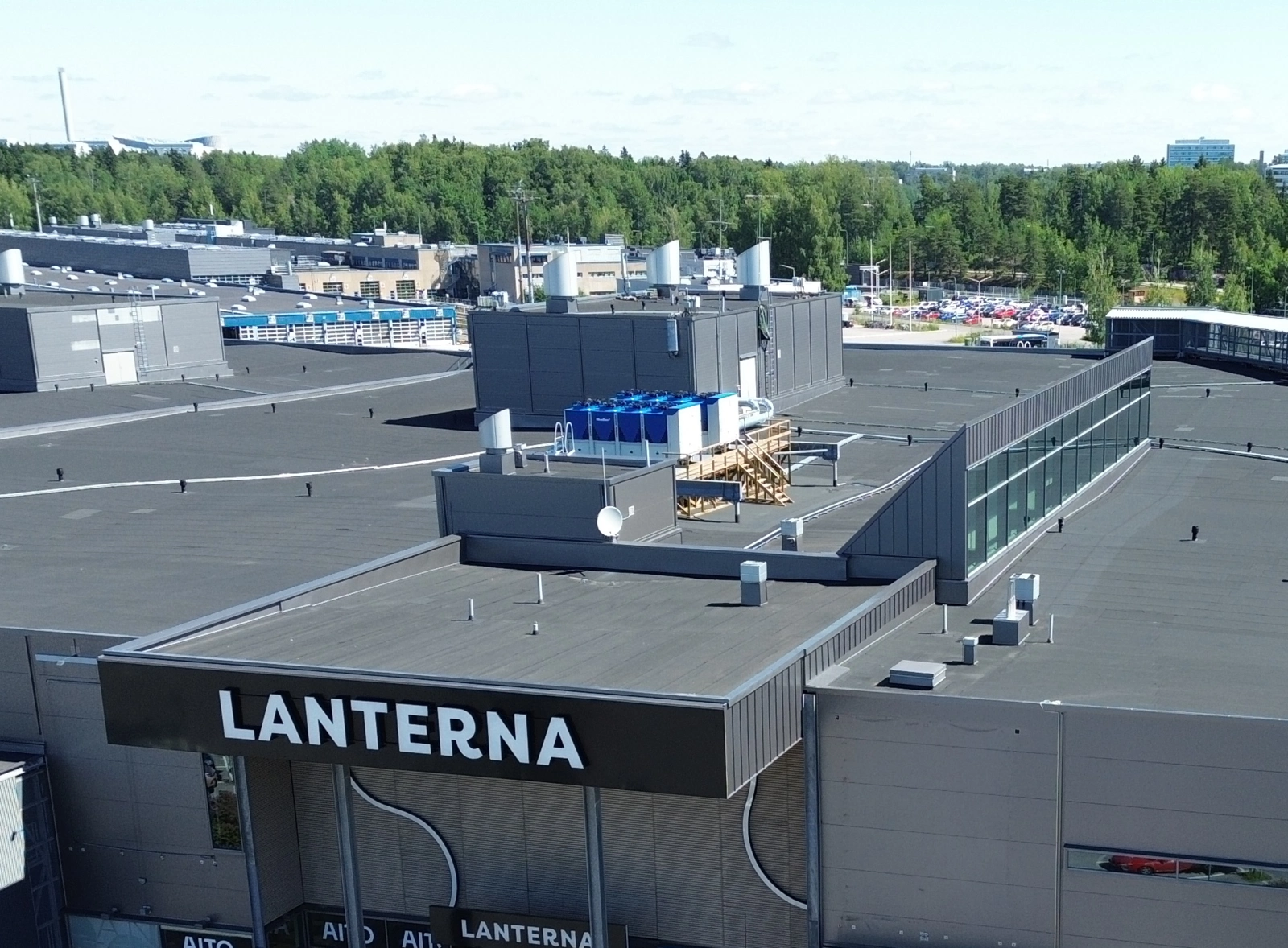
The two air-to-water BlueBox TITAN Zero units combine the functions of cooling and heating through a precise water temperature control. It operates next to a district heating system to optimise energy use.
Time for an energy renovation
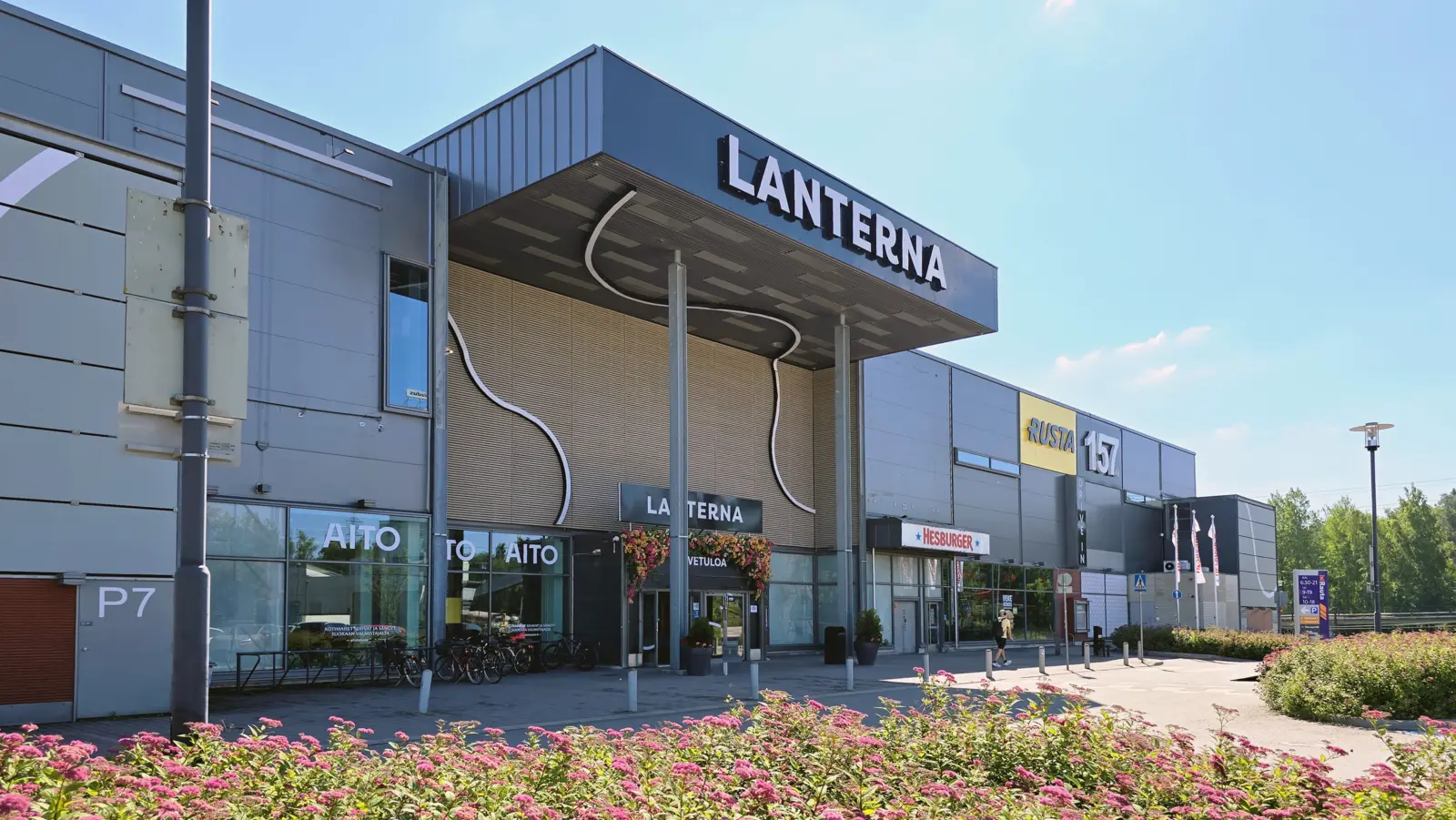
Lanterna shopping centre, located in Helsinki, Finland, opened in November 2005. The two-story building comprises approximately 34 000 square meters and was designed primarily for retailers specialising in construction and interior design products.
As the building approached its twentieth year of operation, it was time for an energy renovation. At the time, the indoor climate solution built on district heating only and it had no cooling system in place. The main objectives were to reduce the carbon footprint and improve the overall heating operation. As this was an ESG project, consideration needed to be given not only to environmental impacts, but also to social and governance aspects.
Story originally captured by Jaana Ahti-Virtanen.
A hybrid heating solution
Hannu Tamminen, Technical Director at Trevian Asset Management, was involved from the very beginning, as Trevian acted as the owner’s representative throughout the project. Trevian works actively with developing their properties for increased energy efficiency and sustainability performance and is accustomed to implementing solutions tailored to the demands of a specific site.
In fact, the suggested hybrid solution, combining a new district heating system with air-to-water heat pumps, had already been implemented in other projects of theirs. As a result, they were positive to the proposal of installing two BlueBox TITAN Zero reversible heat pumps alongside a district heating system.
The sustainability aspects
The hybrid solution was expected to significantly reduce the energy consumption for heating the property. This was based on a presumed 50-60% reduction in use of district heating. This substantial expected reduction is in part related to the heat pumps being able to operate at outdoor temperatures down to minus 20 degrees Celsius.
“Zero” is BlueBox’s way of indicating that the heat pumps use a natural refrigerant and therefore have a very low climate impact. The refrigerant used is propane, R290, which has a global warming potential (GWP) of only 0,02, much lower compared to flourinated chemical refrigerants. An additional benefit of using propane, is that, when used properly, it enables increased unit efficiency and is therefore ideal for high temperature heat pumps.
We used a 300-ton crane with an 80-meter boom. That's unusual in our line of work.Jarkko Aramo, HVAC Project Manager with the contractor Saipu Oy
Early challenges
The time schedule was tight from the outset, three months is a short timeframe, particularly for one with this level of complexity. The contractor, Saipu Oy, was already familiar with the selected solution and the HVAC project manager, Jarkko Aramo, had been involved in similar projects together with Trevian.
One of the early challenges was to fit a new solution into the old property. According to Hannu Tamminen at Trevian, the design of the supporting structures proved to be the most demanding part. Additionally, the process of getting everything in place on the roof required careful planning. At the end of the day, specialised cranes were used to manage the demanding lifts of the HVAC equipment.
New steel platforms for increased load-bearing capacity
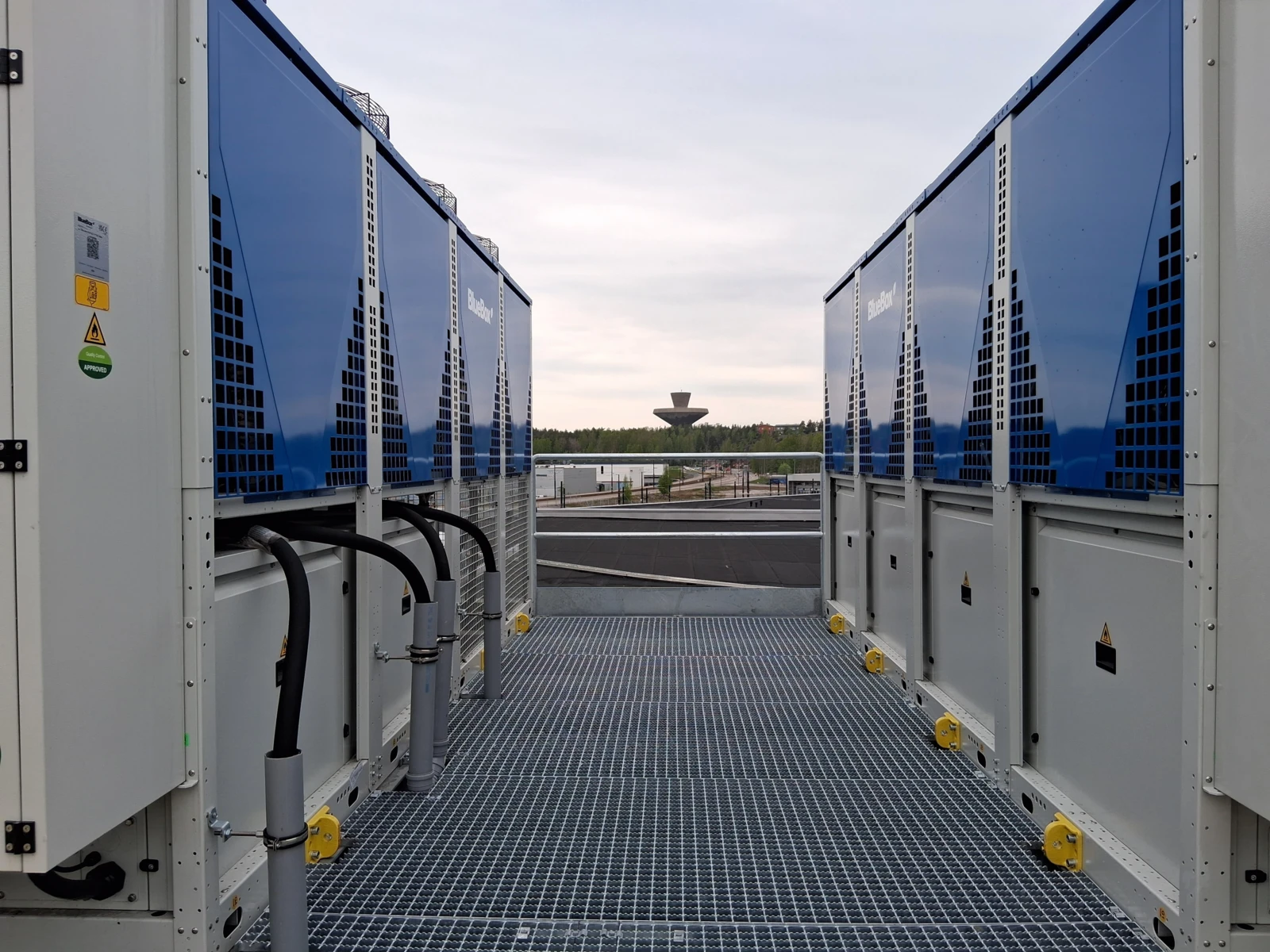
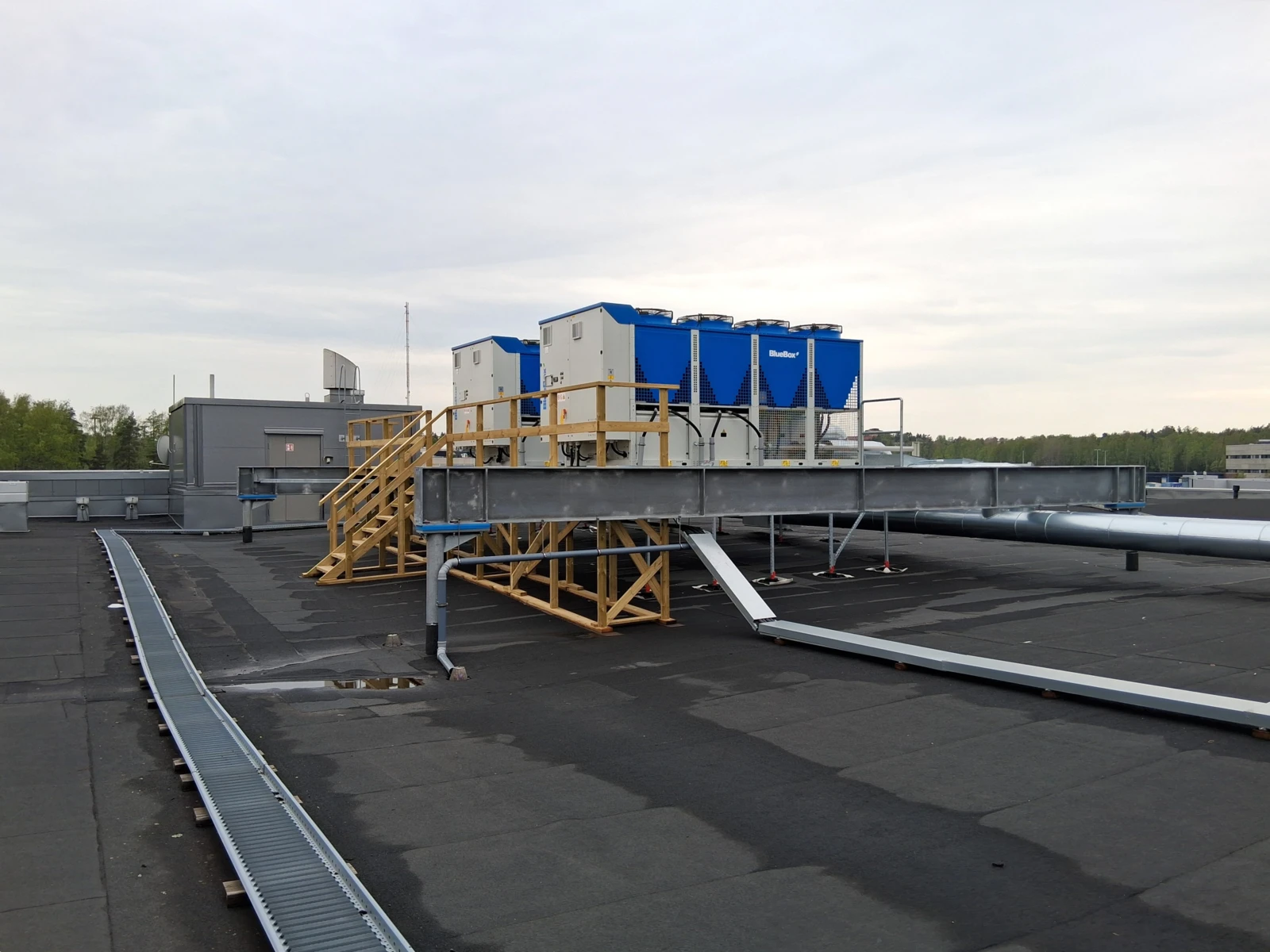
The load-bearing capacity of the existing roof structure was not sufficient for the heat pumps, which meant that a steel installation platform had to be built on top, supported by pillars extending down into the foundation. Steel frames were built on the new platform, and the heat pumps were placed on them.
In this work, acoustics required careful consideration. Vibrations from the pumps could not be allowed to transfer to the building structure, as it would generate noise affecting the indoor environment. To prevent this, the support structure was separated from the building structure using rubber mounts that absorb vibrations.
Heat pump and district heating in place
It is a complex process to build the combined district heating and air-to-water heat pumps next to the old district heating system. However, Jarkko Aramo points out that if the design and selection of components and connections are done precisely from the beginning, the desired outcome is achieved more effectively.
Once the new solution had been commissioned, the old district heating system was smoothly disconnected within a day’s work. By the end of the project, the old district heating system was completely dismantled.
The shopping center remained in operation throughout the three-month renovation,
with no disruption to tenants or visitors.
Project complete
The two air-to-water BlueBox TITAN Zero reversible units provided for this project combine the functions of cooling and heating through a precise water temperature control. This thanks to variable speed compressors.
A couple of features were particularly relevant in this project: the units' ability to supply water at temperatures up to 63 degrees Celsius and their reverse operation mode, enabling cooling to the building as well. The latter significanly improved the indoor climate conditions inside the shopping centre.
Blog: Cooling demands in a changing climate
Towards set goals
Since November 2025, the energy performance of Lantern Shopping Centre has been monitored, and despite the particularly cold winter of 2025–2026, the expectation is that the BlueBox TITAN Zero heat pumps will reduce annual district heating consumption by at least 50–60 percent over time.
Get familiar with TITAN Zero