Efficient and sustainable HVAC technology
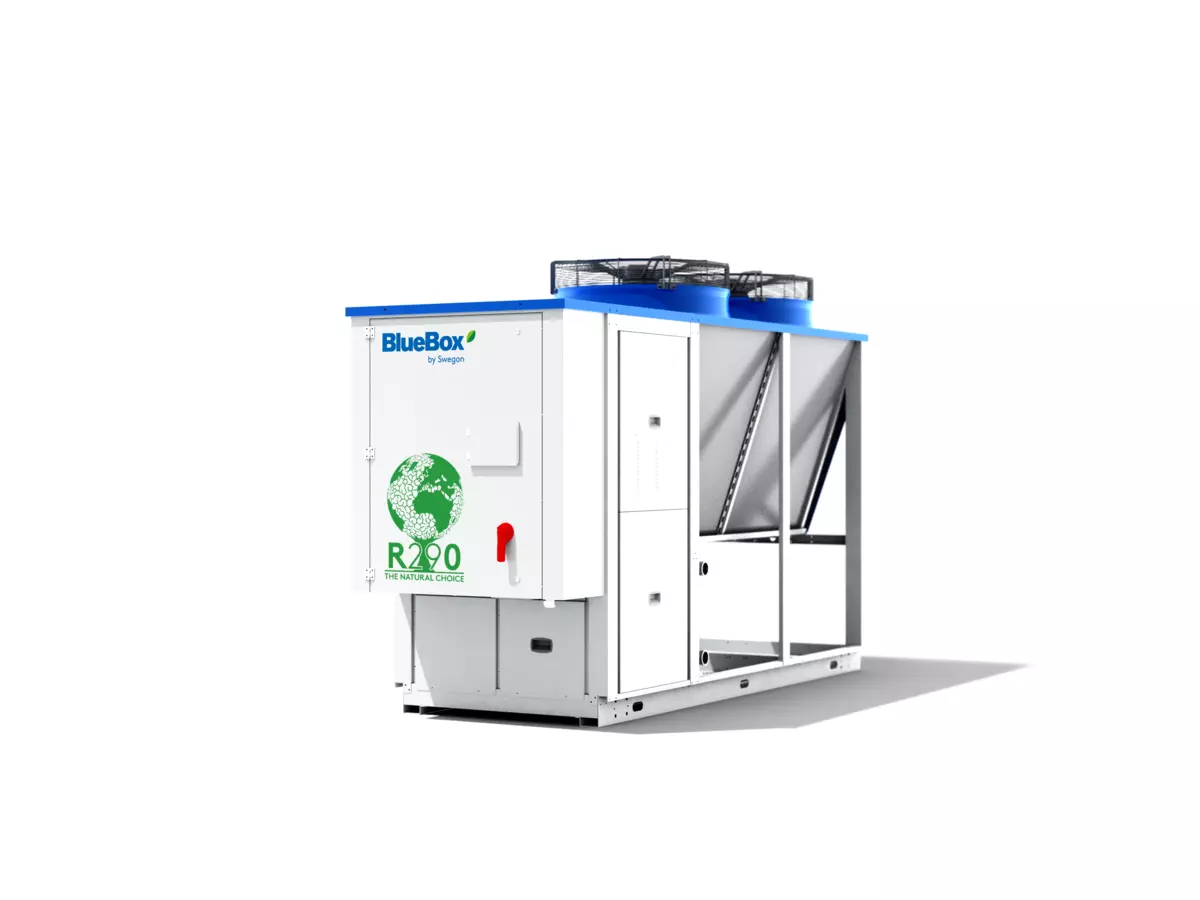
TITAN Sky heat pumps with R290 refrigerant used together with a climate ceiling sail based on A11 sails and AQUILO hybrid systems.
A forward-looking facility for future talents
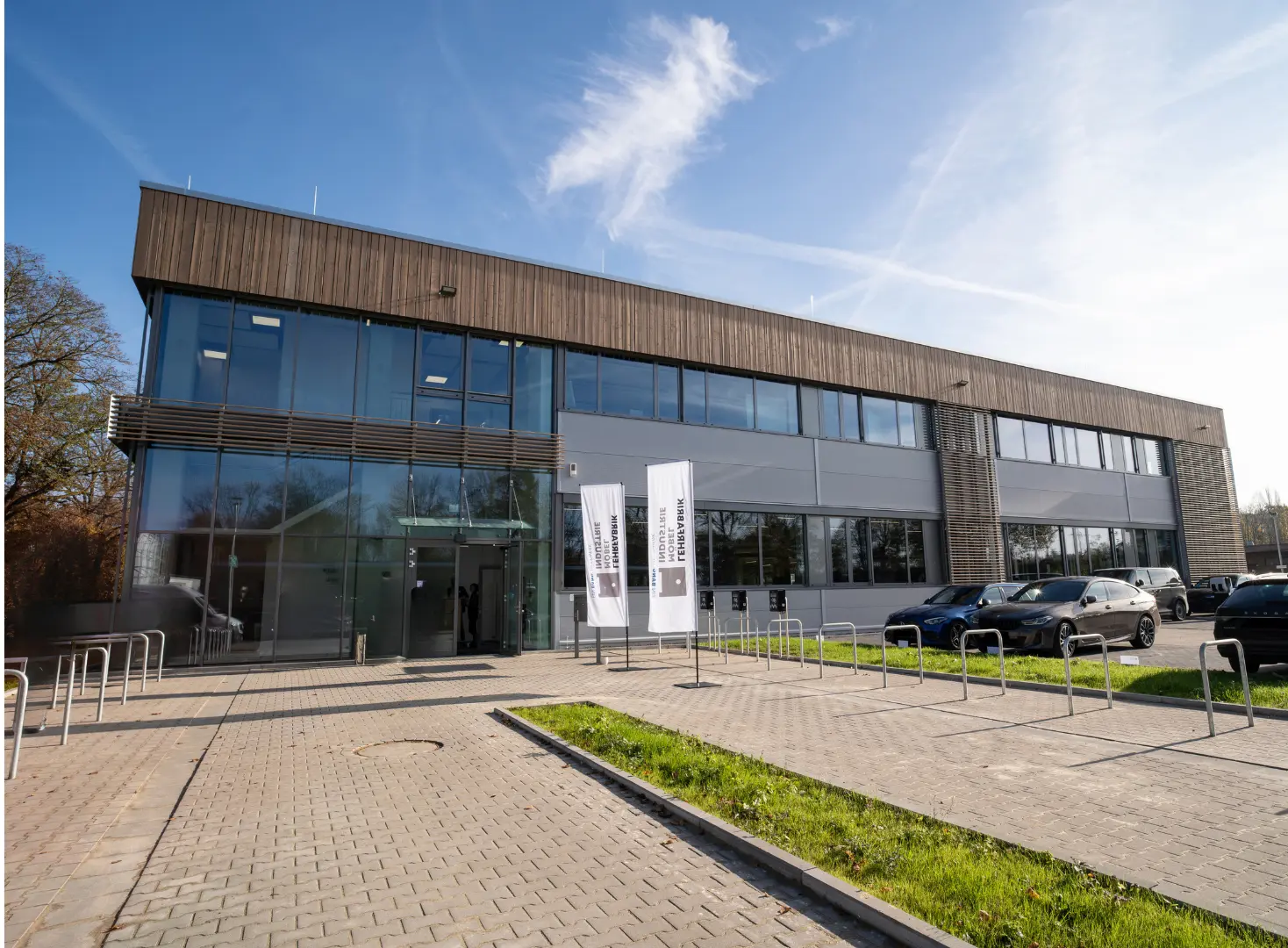
The Lehrfabrik Möbelindustrie in Löhne, Germany, is a forward-looking training centre designed to meet the needs of the regional timber and furniture industry. Located at the heart of the newly developed education campus, the facility offers hands-on training opportunities at the highest technical level.
Completed in 2024, the Lehrfabrik is a modern building with a total floor area of 3,700 square metres across two storeys. The training workshop is located on the ground floor, while teaching rooms, offices and break areas are arranged on the first floor. Sustainability and cost efficiency were key criteria, both during the construction phase and in ongoing operation.
A strategically planned choice of heat pumps
To meet the project’s sustainability demands, the planning and implementation consultants, Bienek GmbH and Brüninghoff GmbH & Co. KG, selected two reversible TITAN Sky Hi HP heat pumps. Two provides redundancy and increases operational reliability. The units are designed to deliver a flow temperature of 35 degrees Celsius at an outdoor temperature of –7 degrees, making them well suited to the underfloor heating system in the large training workshop.
The units are compact and achieve a high level of efficiency through inverter-controlled reciprocating compressors. However, given the units’ location, with residential buildings in close proximity, implementation posed some technical challenges related to noise. Acoustic enclosures were therefore incorporated at an early planning stage to ensure a quiet operation.
Learn more in our experts blog post on acoustics
To our TITAN Sky heat pump
Sustainability from the inside
The two TITAN Sky units were selected to operate with a natural refrigerant rather than conventional synthetic alternatives. The refrigerant used is R290, commonly known as propane. Propane has a global warming potential (GWP) close to zero, compared to GWP values up to 2000 for many synthetic refrigerants.
The decision to use R290 was therefore intentional, and supports several targets in terms of sustainability, efficiency and future-proofing.
Climate ceiling sails for an even temperature distribution
The heating and cooling solution was planned and implemented in close coordination with all project partners. The heat pump was delivered up to the interface at the plate heat exchanger, from where the internal building installation takes over.
For indoor climate control, the project team opted for the A11-S ceiling panel system combined with an AQUILO hybrid system, alongside an external central air handling unit (AHU).
In total, 219 ceiling panels were installed and arranged into modular heating and cooling sails, with two to three panels are forming each sail. With a typical coverage of around 60 % of the ceiling area, the solution provides an even temperature distribution, while suspended luminaires complement the architectural rhythm of the space.


Precisely engineered technology to suit the location
The ceiling sails were individually adapted to the room geometries and lighting concept, with some units measuring up to 7,5 metres in length. Explicit construction requirements, such as suspension from trapezoidal metal decking with corrugations, were also addressed with custom-designed solutions.
The ceiling solutions operate with low supply and return temperatures which further contributes to overall energy efficiency. Each sail, two to three panels combined, can be controlled individually, allowing demand controlled temperature regulation. Together, the heat pumps and chilled ceilings form an efficient overall solution that combines comfort, sustainability and aesthetics.
Supply air from the AHU is discreetly integrated into the ceiling solution, creating a clean and uncluttered visual appearance.
What to know about energy efficiency and climate ceilings
An efficient and sustainable facility for hands-on training
The success of the installation is reflected not only in its performance, but also in user satisfaction. These ceiling solutions provide draught-free indoor climate conditions, while the measures taken for a quiet operation allows for low noise levels both inside the building and in the surrounding neighbourhood.
Propane technology has become more widely established on the market, but was a well-considered choice at the time of planning this project. The Lehrfabrik was among the first facilities in the region to adopt this approach, which underlines its ambition to not only teach innovation, but to also apply it in practice. The project demonstrates how modern building technology and forward-looking education can work together efficiently and sustainably.
RE:duce, an activity within our RE:3 circularity concept
You can hardly hear them, it is truly impressive!The nearly silent heat pump operation commented by a project team member during commissioning