
More efficient solution at a lower cost
Quick Facts:
COUNTRY:
USA
Building Year:
2008
City, state:
Waltham
End User:End User:
AstraZeneca
AstraZeneca
A PARASOL case study where the many advantages of four-way air distribution convinced AstraZeneca to go for our ground-breaking comfort modules instead of the conventional two-way air distribution of chilled beams.
The efficiency of the Parasol installation helps support AstraZeneca’s “lean initiative” and energy saving goals.
Overall satisfaction with the Parasol solution is high, and the projected ongoing cost savings over next-best HVAC alternatives is 20%. The perceived risk of adopting the four-way blow technology alternative was mitigated by the realization of significantly enhanced airflow adjustability. The efficiency of the Parasol installation helps support AstraZeneca’s “lean initiative” and energy saving goals. The AstraZeneca project manager said, “The change from 2-way to 4-way technology proved to be beneficial in terms of cost and ceiling space allocation. The change to Swegon proved to be the right decision as they delivered the right product, on time. All of the beams were properly designated and set-up in the factory for location and orientation in addition to being staged to facilitate the sequence of installation. Project teams should not be reticent in exploring changes that can promote more efficient designs, both in terms of energy and project execution. Once the simplicity of the product was understood, the worries go away.”
Requirement:
New technology often requires two equally committed partners. The first is the developer of the technology and the second is the customer who, after thorough evaluation, is willing to give the technology a try.
An inspiring example of this kind of partnership is the recent collaboration between two international companies: Swegon and AstraZeneca. Swegon is a global manufacturer of HVAC products (heating, ventilating and air conditioning), based in Kvänum, Sweden. AstraZeneca is a global biopharmaceutical company, based in London, The United Kingdom.
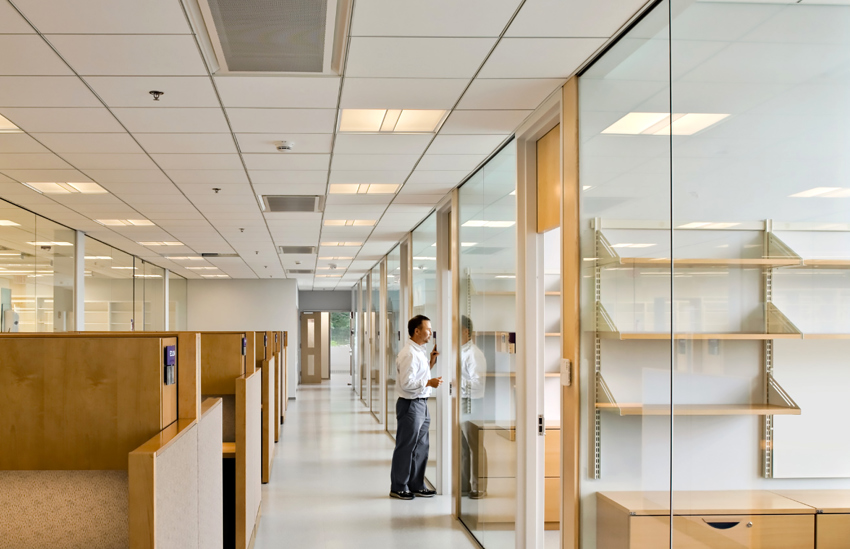
The two companies began to collaborate in the US while AstraZeneca was designing an addition to their research campus in Waltham, Massachusetts. The facility plan combined offices and laboratories, presenting unique challenges for all aspects of mechanical system development. Among the most demanding was the need to heat and cool office workspaces while providing appropriate environmental control within adjacent research and development laboratories. “VAV”1 would have been a logical HVAC choice. An alternative to VAV cooling, chilled beam technology was already in the plan. AstraZeneca was familiar with the technology, having used “two-way blow” chilled beams throughout its five existing buildings in Waltham, primarily in offices. AstraZeneca had decided to continue with chilled beam technology in the new addition. The collaboration with Swegon was driven by AstraZeneca’s interest in the possibility of using fourway rather than two-way blow beams. Four-way offered the potential for cost reduction through the use of fewer beams, higher cooling output from a smaller ceiling footprint, and the possibility of using the technology in select lab applications. AstraZeneca also had a favorable experience with Swegon at its facilities in Sweden.
Customised solution
- From AstraZeneca experience in Sweden, Swegon’s two-way blow products were known to perform well and the company was considered a technology leader. This information, coupled with AstraZeneca Boston’s fourteen years of experience with chilled beam technology, paved the way for further investigation at this late stage of the project.
- Parasol four-way blow comfort modules provided superior air flow volume and adjustability over two-way. The Parasol 4 way spread would make it easier to adapt the HVAC when changing an office from open office planning to cells and back again.
- Chilled beams could be downsized for four-way, with corresponding energy savings.
- Fewer chilled beams would be needed with four-way. This resulted in savings to the ductwork design and also a reduction in the number of control valves and piping connections that would be needed.
- Four-way air flow adjustability would make it possible to use fewer modules in some offices, depending on total heat load.
- Lower velocity air flow with four-way would mean less noise and better acoustics.
- Four-way retained the advantages of chilled beam, including little to no maintenance requirements, no moving parts and corresponding high reliability.
- Reliable and efficient design will continue to support LEAN and energy saving initiatives, resulting in less resources in the operation and maintenance of the HVAC infrastructure.
- Aesthetically, the four-way comfort modules would be more acceptable than long two-way linear chilled beams.
- And in a future development, introduction of 4-way blow technology eventually resulted in AstraZeneca Boston’s revisiting the application of chilled beams in select laboratories.

Conference room
Hallway

Lobby
Conference room
Hallway
Lobby
It is all in the details
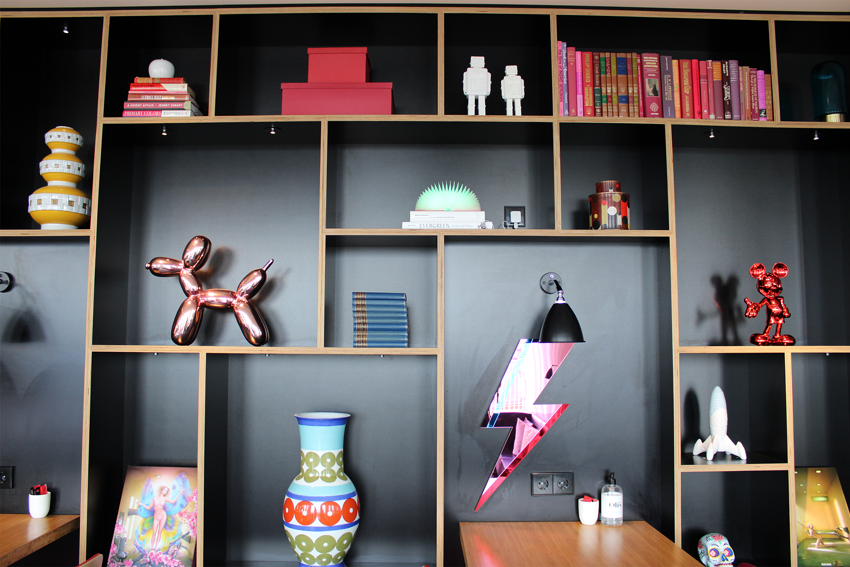
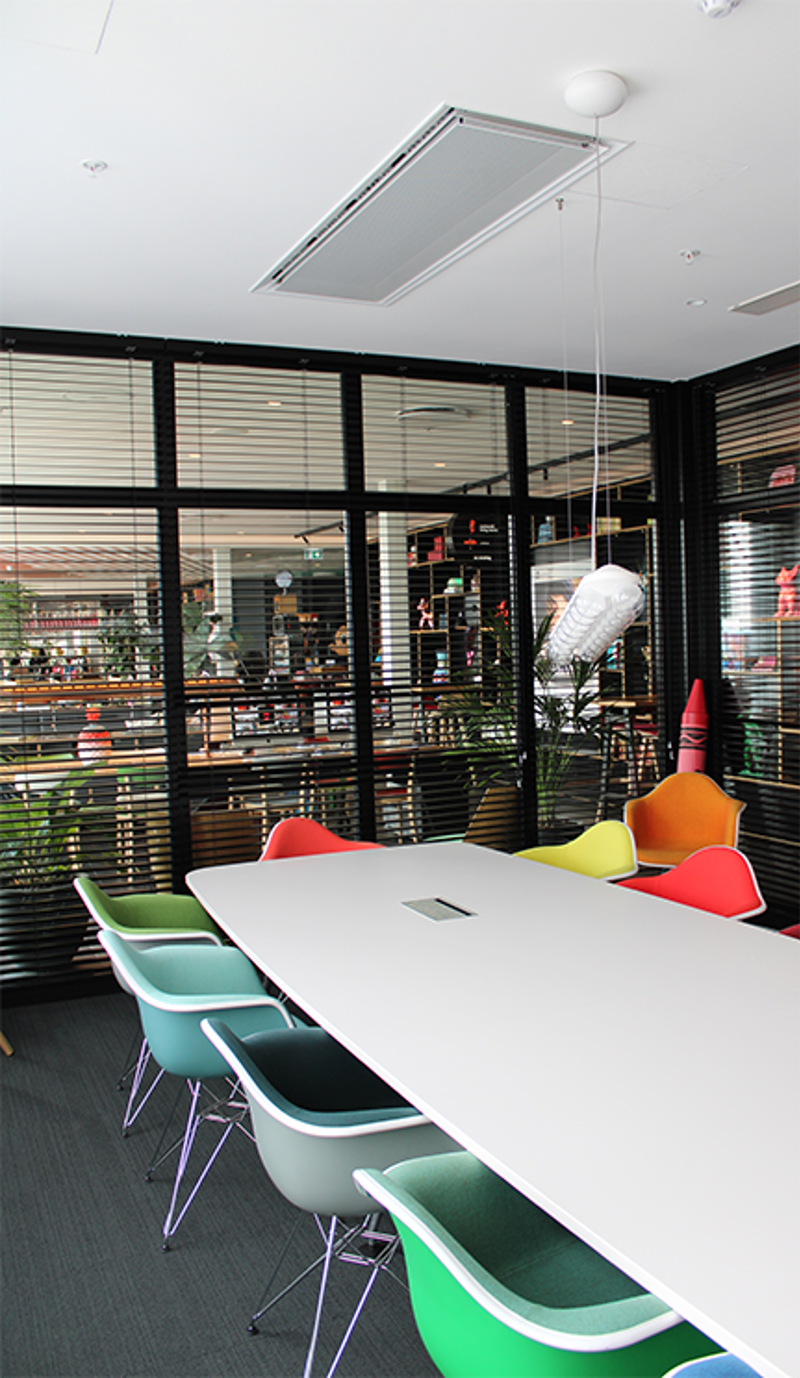
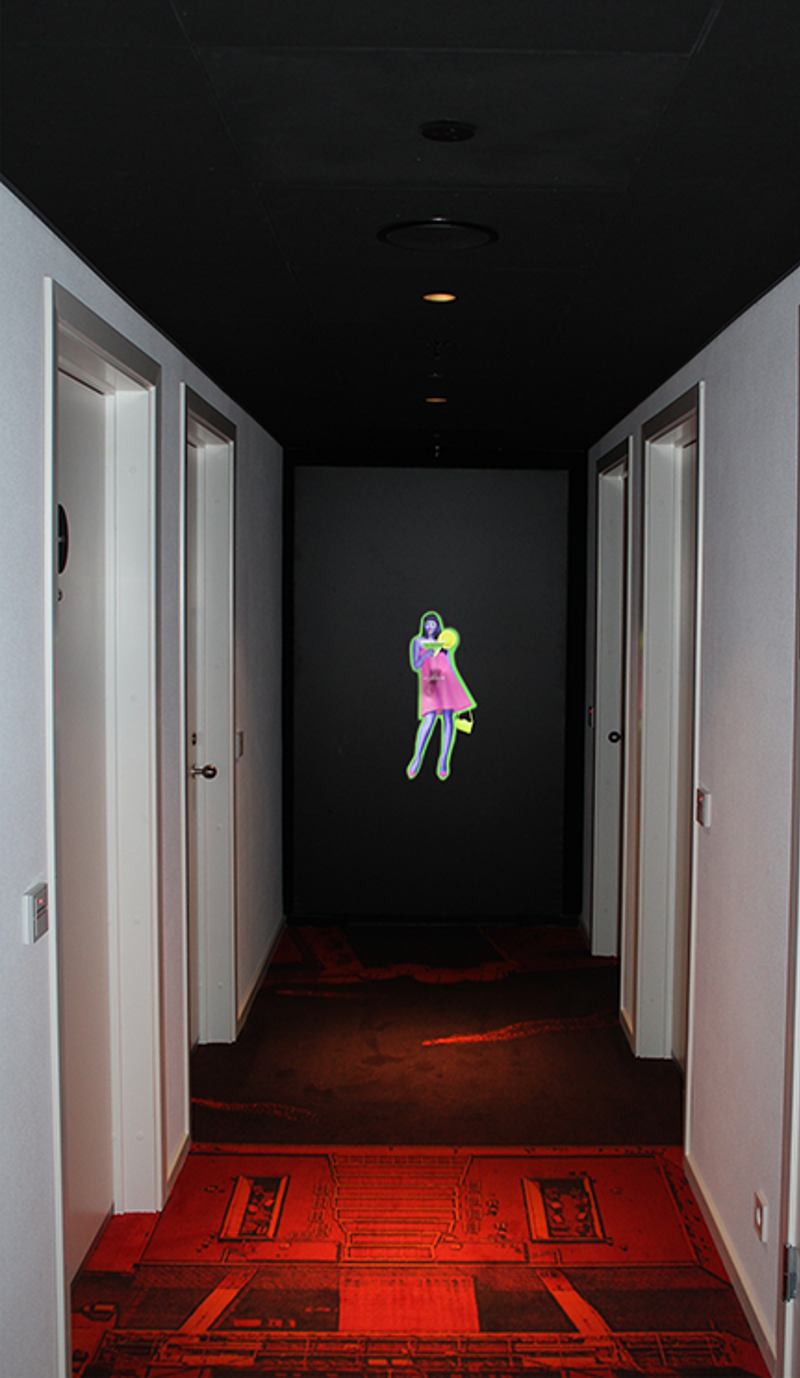
There are a lot of fun and modern design details throughout the hotel that for sure will make you smile. All over the place there are witty, fun and colourful details.
citizenM Copenhagen Rådhuspladsen stands out among other hotels, not only by creating an exceptional guest experience, but also by inviting local artists to add a real local vibe to the exterior and interior. For citizenM Copenhagen Rådhuspladsen, artist Troels Aagaard painted an entrance mural on both walls, while Ditte Ejlerskov and HuskMitNavn contributed in-room art, wall and ceiling murals in the sky bar.